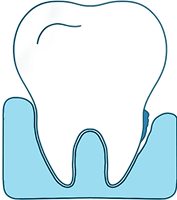


Periodontal disease
The periodontal disease (gum disease) is a common condition that affects your teeth and gums. It means there's inflammation, infection, or pain in the soft tissues surrounding your teeth.
What are the different types of periodontal disease?
Gingivitis
The mildest form of periodontal disease is called gingivitis. The gums become redder and swollen. They may bleed when you brush. Bleeding when you brush is usually the first sign of periodontal disease.
Gingivitis is usually caused by a buildup of biofilm (plaque). Biofilm is a very thin, sticky layer that covers the teeth. It contains many bacteria, and it is these bacteria that cause gum inflammation.
Periodontitis
Periodontitis is the most serious form of periodontal disease. It develops if gingivitis is left untreated. When biofilm is not removed, it hardens and forms calculus. As it forms around the teeth, the calculus irritates the gums and causes inflammation. Calculus can only be removed by a dentist or hygienist. If this is not done, the inflammation becomes more severe and, over time, can cause bone loss and tooth mobility. If the bone supporting the teeth is lost, they begin to move and may eventually fall out or need to be removed.
Periodontitis can be painful. It often looks unpleasant and can make chewing difficult. It can also cause bad breath.
How is periodontal disease treated?
The first thing you should do if you suspect periodontal disease is come see us at Semüi. The dentist or hygienist will remove all biofilm and calculus that has accumulated. We call this tartar removal or dental hygiene. We will also check that fixed restorations (crowns and bridges) or plastics (fillings) are well-fitting and do not contain biofilm that is difficult to clean.
The most important thing you can do to treat periodontal disease is to keep your teeth and gums clean and healthy. We'll make sure you know how to brush and floss so you can maintain all your teeth. If necessary, we'll recommend a mouthwash to help keep the bacteria in your mouth to a minimum.
Occasionally, patients with periodontal disease require antibiotics. You may need antibiotics if a periodontal infection or abscess (abscess) has developed. If your periodontal disease is severe, you may need further treatment, such as scaling or curettage, or even surgery. Your dentist or hygienist will discuss your needs; the treatment plan is always individual and tailored to each patient.
How can I prevent periodontal disease?
The only way to prevent periodontal disease is taking care of your teeth. Good oral hygiene helps prevent biofilm buildup and prevents gum irritation.
To keep your gums healthy, try the following tips:
- Use a manual or electric toothbrush with a small head and medium-hard bristles..
- Make sure you brush all surfaces of the teeth correctly.
- Brush two or three times a day around 2 minutes every time, especially at night.
- Replace your brush or brush head every 3 months.
- Use antimicrobial mouthwash to prevent biofilm buildup.
- Visit us at regularly for check-ups and scaling.
- If you smoke, it is important quit smoking, since tobacco increases the risk of periodontal disease and interferes with your response to treatment.