

Cracked teeth
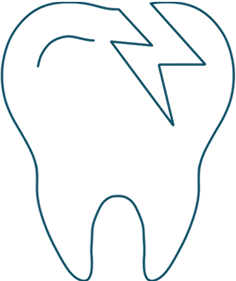
A tooth can crack or break in several ways, either in a straight crack, multiple smaller cracks across the surface of the tooth, or a crack that splits the entire tooth in two.
Teeth can break or chip for a variety of reasons; sports injuries, accidents, teeth grinding, or even biting on hard foods can cause teeth to crack or break. If you have a broken or chipped tooth, it's important to see us as soon as possible to prevent further damage.
How can I tell if I have a broken tooth?
Some lesions are immediately obvious, while some cracks may be barely visible. If you have a crack in your tooth, you'll likely experience discomfort when eating, as well as sensitivity to hot and cold temperatures.
What should you do if you have a broken tooth?
If you think you have a broken or cracked tooth, you should come see us, even if you think the damage is minimal. We'll assess the severity of the damage and explain your treatment options. The problem could worsen if left untreated and could damage the tooth's nerve or even lead to tooth loss.
If you've suffered a dental injury, it's important to get help immediately. In the meantime, rinsing your mouth with warm water and holding an ice pack wrapped in a clean towel on the affected area will help. If part of the tooth has broken off, keep it in your mouth, soaking it in saline solution or milk, until you arrive at the clinic, as we can reattach it.
Treatment for broken and chipped teeth
If left untreated, cracks and fissures can lead to further problems. Depending on the severity of the damage to your teeth, the following treatments may be performed:
- Fillings: They can be made to fill in gaps caused by a crack, to smooth the edge of a chipped tooth, or to replenish a missing area.
- Crowns: A crown can be placed over the top of a chipped or broken tooth.
- Veneers: They can be used to cover a broken or chipped tooth, depending on how much of the tooth is still intact.
- Root canal treatment (endodontics): If the blood vessels and pulp inside the tooth have been damaged, you may need root canal treatment.
How to prevent broken teeth?
If you play sports where your teeth may be at risk, consider having a custom-made mouthguard fitted at a dental office.